
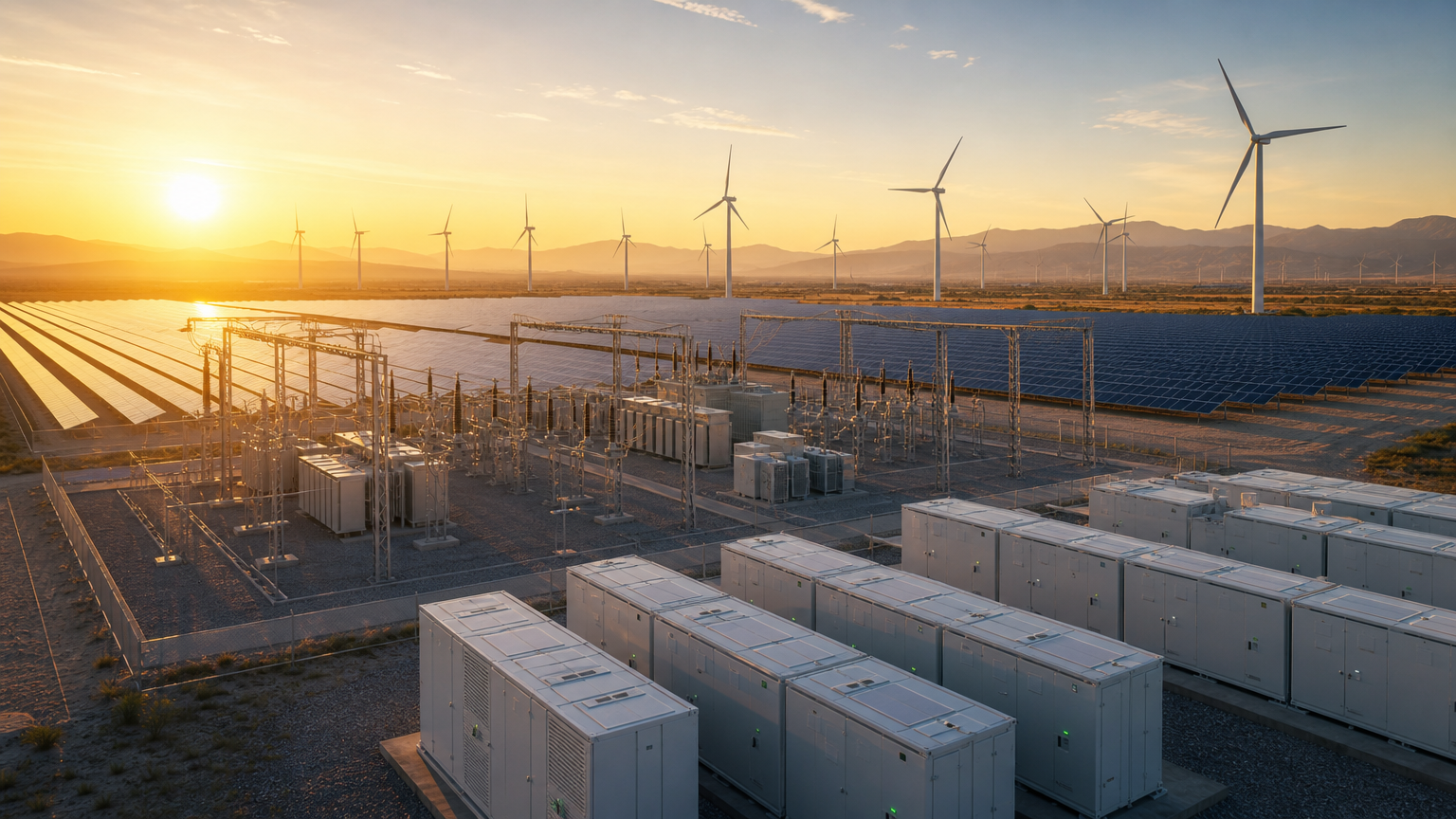
For years, the renewable energy story sounded simple: solar got cheaper, batteries scaled up, and wind turbines kept getting bigger. That part is still true. But the harder question now is not whether clean power can be built cheaply. It is whether the grid can take it fast enough.
This is the bottleneck behind the solar boom. Developers can secure land, sign power purchase agreements, and order equipment, but none of that produces electricity for customers until a project connects to the network. In the United States, Europe, and other large power markets, grid connection queues have become the place where many technically viable clean energy projects sit for years.
That changes the economics of the energy transition. When grid access is scarce, the winners are not only the cheapest solar manufacturers or the newest battery companies. The advantage shifts toward developers, utilities, and regions that can line up generation, storage, transmission planning, software, and permitting at the same time.
Why the bottleneck is getting worse
Clean energy deployment has moved faster than grid planning. A solar farm can often be developed in a few years. A major transmission line can take much longer because it crosses jurisdictions, needs public consultation, and requires regulatory approval before construction begins. Generation is moving at technology speed. Networks are moving at infrastructure speed.
The mismatch shows up in interconnection queues. Developers have requested far more renewable capacity than grid operators can study and connect quickly. Some projects in those queues are speculative, so the headline totals should not be treated as guaranteed future capacity. Still, the queue tells us something real: developers are racing for grid access because grid access has become valuable.
There is a physics problem too. Solar output is strongest around midday, while demand can peak later in the day. Wind output can be strongest far from cities and industrial loads. Batteries help, but they also need grid connection and market rules that reward flexibility. Without enough network capacity, cheap power can be stranded in the wrong place or at the wrong hour.
Flexibility matters more now

The next phase of renewable energy is less about raw capacity and more about flexibility. That means batteries, demand response, virtual power plants, better forecasting, dynamic line ratings, and other grid technologies that help operators use more of the clean power already being built.
Batteries are the easiest piece to see. They can move midday solar into the evening, smooth sudden changes in output, and provide grid services that used to come from fossil fuel plants. But batteries are not magic. A poorly located battery can still run into congestion. A well placed one can reduce pressure on local networks and improve the economics of nearby renewables.
Software is part of the fix. Better forecasting helps operators prepare for changes in renewable output. Virtual power plants can coordinate household batteries, electric vehicles, smart thermostats, and commercial loads. Dynamic line ratings use weather and equipment data to raise safe transmission limits when conditions allow. These tools do not replace new wires, but they can unlock capacity from assets that already exist.
Permitting is part of the technology stack
One uncomfortable lesson from the past few years is that policy can slow hardware down. A country can subsidize solar panels and batteries, then lose time because permitting, interconnection studies, and transmission approvals remain fragmented.
That is why grid reform has become a competitive issue. Regions that shorten connection timelines without weakening reliability will attract capital. Regions that leave projects stuck in procedural limbo will pay more for clean power, even if equipment prices keep falling.
The useful reforms are not just "approve everything faster." They prioritize serious projects, require financial commitments to reduce speculative queue entries, standardize technical studies, and coordinate transmission planning with expected renewable buildout. The grid has to be treated as the platform for the energy system, not as paperwork that happens after the interesting parts are done.
What investors and readers should watch
For investors, the grid bottleneck changes what counts as a strong renewable energy story. A developer with secured interconnection rights may be more attractive than one with a larger but uncertain pipeline. A battery operator with good market access can be more defensible than a hardware-only company competing on price. A utility that invests early in network modernization may capture growth that slower peers miss.
For consumers, the issue shows up indirectly. Grid congestion can raise costs, delay decarbonization, and create political backlash when clean energy targets look unrealistic. It can also shape where data centers, factories, and electric vehicle charging networks get built. Energy abundance is increasingly local. The question is not only whether a country has cheap renewables, but whether a specific region can deliver them when needed.
The renewable transition is entering its infrastructure phase. The first big story was proving that solar and wind could be cheap. The next one is making the whole system work at scale: wires, storage, markets, sensors, software, and institutions.
The bottleneck has moved
The solar boom is real, but panels are no longer the hardest part of the equation. Connection, flexibility, and grid coordination are becoming the scarce resources.
That does not make the renewable transition weaker. It makes it more practical. Every large energy system runs into integration problems. The difference now is speed: clean power is scaling quickly enough to expose planning models that were built for a slower era.
The strongest players in this phase will be the ones that make renewable electricity easier to connect, shift, and rely on. In 2026, the clean energy race is increasingly a grid race.


Comments
No comments yet. Be the first to share your thoughts.
Leave a comment